 Instaswap
 refunds
InstaSwap’s October 2026 whitepaper v2.2 describes failed-swap refunds going to the refund address fixed before deposit. The route determines whether the underlying protocol’s validators or routed-swap escrow handle the return. The document gives no single refund deadline for all orders.
Last updated:
Is the return address fixed before funding?
The receiving address is for the requested swap output; the refund address is for the return if the swap fails. In the documented walletless flow, both are supplied before the temporary deposit address is generated.
For routes using the documented escrow, the refund destination is committed before the deposit address is shown. A caller triggering the timeout refund cannot choose a replacement recipient.
Who processes a failed swap?
Protocol-level returns
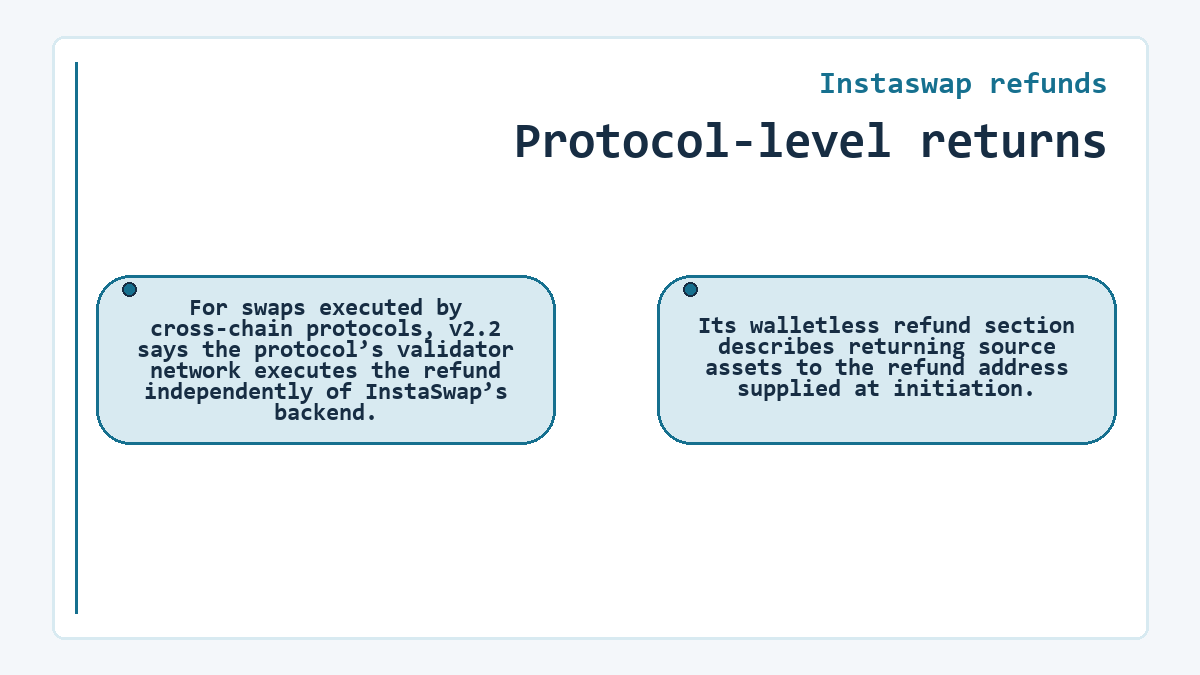
For swaps executed by cross-chain protocols, v2.2 says the protocol’s validator network executes the refund independently of InstaSwap’s backend. Its walletless refund section describes returning source assets to the refund address supplied at initiation.
Returns from multi-leg escrow
A route combining multiple legs can have funds in transit between conversions. The whitepaper describes programmatic on-chain escrow restricting those funds to the next leg of the same order or the committed refund destination, subject to the documented leg fees.
Once the applicable escrow refund timeout has elapsed, the document says anyone can trigger a return to that committed destination. It does not specify one timeout duration for every order.
What determines timing and the amount returned?
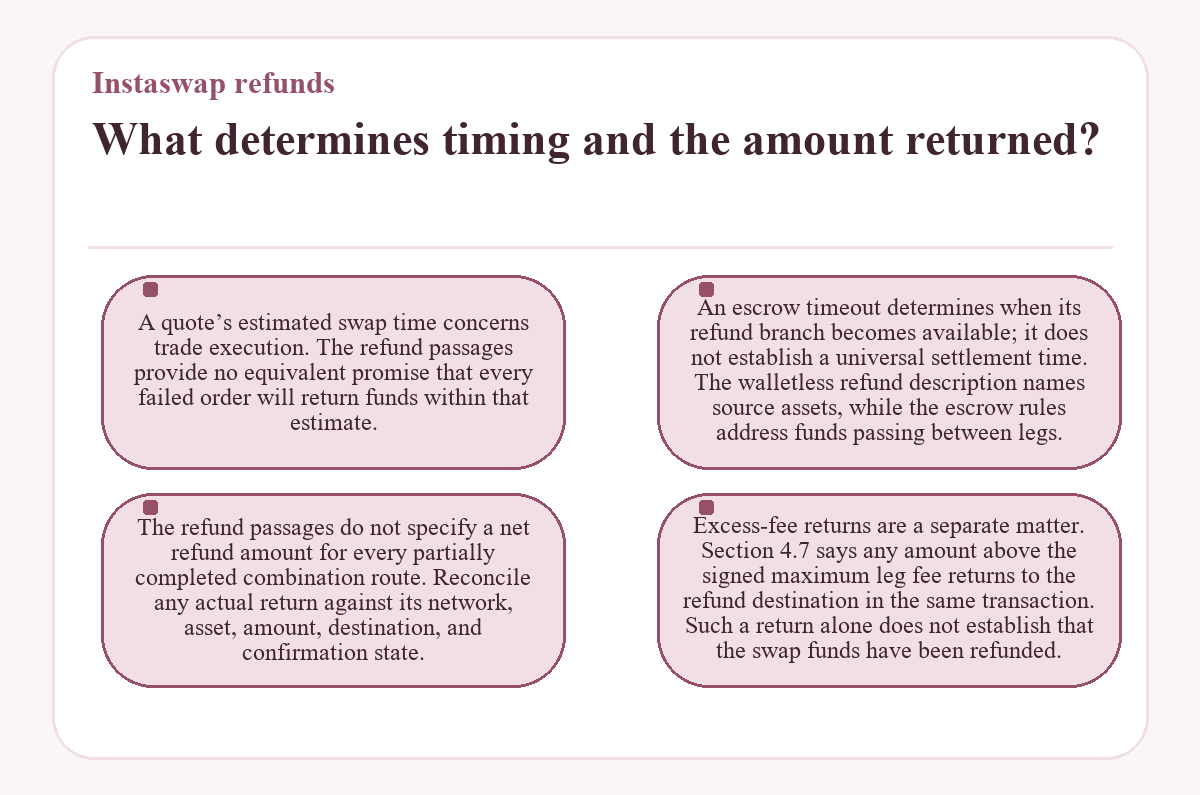
A quote’s estimated swap time concerns trade execution. The refund passages provide no equivalent promise that every failed order will return funds within that estimate. An escrow timeout determines when its refund branch becomes available; it does not establish a universal settlement time.
The walletless refund description names source assets, while the escrow rules address funds passing between legs. The refund passages do not specify a net refund amount for every partially completed combination route. Reconcile any actual return against its network, asset, amount, destination, and confirmation state.
Excess-fee returns are a separate matter. Section 4.7 says any amount above the signed maximum leg fee returns to the refund destination in the same transaction. Such a return alone does not establish that the swap funds have been refunded.
What does the reported September delay establish?
In a Reddit report by SolarisizeLa published October 3, 2026 and marked updated October 2, the author described a September 11, 2026 TRX-to-ETH order. They reported that an intermediate TRX-to-USDT stage involving NEAR Intents showed success while the overall order showed failed, with neither ETH delivery nor a refund at the time of that update.
The author also said InstaSwap attributed refund processing to NEAR Intents and declined to commit to reimbursement from its own funds if the provider failed to return the assets. Those statements are the user’s account of correspondence. An undated comment also says money was returned, but its connection to this order is unclear. The thread does not establish a confirmed later outcome for this specific order.
The order predates the October 2026 escrow generation identified in v2.2. That later design description alone cannot establish which recovery rules governed the September order.
Does an intermediate success confirm a refund?
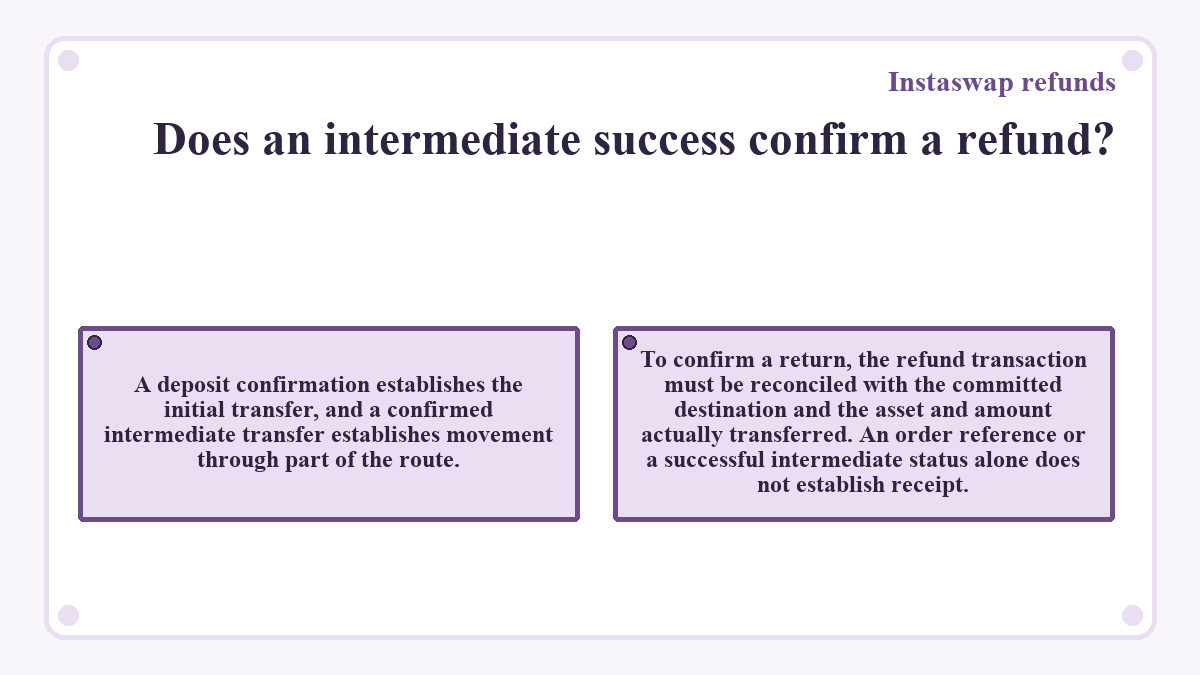
A deposit confirmation establishes the initial transfer, and a confirmed intermediate transfer establishes movement through part of the route. To confirm a return, the refund transaction must be reconciled with the committed destination and the asset and amount actually transferred. An order reference or a successful intermediate status alone does not establish receipt.
Hypothetical example: Interpreting a successful leg
The refund remains unverified in this hypothetical example. Assume a BTC-funded order for a Solana token uses a cross-chain leg followed by Jupiter. The first leg reports success, while neither final delivery nor a return to the committed refund address has a transaction record. The route choice and all order observations here are hypothetical.
Those records show a success status for one intermediate leg. They leave delivery of the requested token and return of funds unverified. They also do not identify who controls any intermediate funds or when those funds can be released.